Is My Child Mine? Dna Testing Kit Reviews
The first surprise of Michèle'south DNA test was how much saliva it took. "It was daunting. It took us, like, 20 minutes. And the more nosotros laughed, the harder it was to do."
It was May 2016, and she and her now husband had ordered the kits as very early Christmas presents for themselves. They had been researching their family copse – Michèle had traced her male parent'southward family back as far equally the 1600s – and had wanted to test their Deoxyribonucleic acid but had been put off by the cost. They were saving for a fertility treatment and had merely recently moved to Florida from New York.
But Michèle was considering going back to study, and she had been told she had some Native American blood on her father's side – peradventure if she could say how much, she figured, she would be eligible for scholarships. And so she and her married man came to be cracking up, spitting into their private vials. "Nosotros joked nigh sending them sweetener samples, to see if information technology yet works."
In bed one dark six weeks later, they pulled upwardly the results from AncestryDNA on the laptop. They were impressed by the news nearly Michèle'southward husband, which mostly reflected what he had always been told about his family. And then they opened Michèle's results. "The first thing that popped up is a pie chart, and one whole half was cherry-red and said 'Italian republic'.
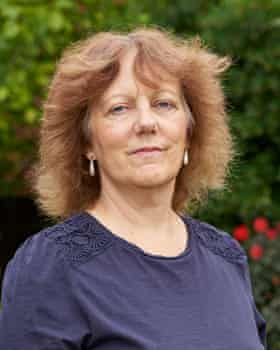
"I was dumbfounded. Like: 'Well, that's a huge mistake. They must have mixed mine up with someone else's.'" She laughs, but y'all tin can hear it is hard-won. "My husband looks through it, then he says: 'Honey, they didn't make a mistake. This is you lot.'" That dark, Michèle had her start e'er feet assault.
Recently Deoxyribonucleic acid testing – once only accessible to doctors and detectives – has been extended to anyone curious about where they came from and willing to spend the all-time role of £100 to detect out. Since launching in May 2012, AncestryDNA says it has tested more than 10 million people in xxx countries. 23andMe says it has more than v 1000000 subscribers; FamilyTreeDNA claims two million.
All of them are racing to grow their databases and their accurateness. AncestryDNA is particularly visible, sponsoring the television program Long Lost Family and running expensive adverts inviting people to find their inner Viking ("This sword is your history") or their innate links to the EU postal service-Brexit.
It all sounds harmless, until you learn that as well as revealing customers' ethnic origins, many DNA tests will also identify relatives in the companies' databases. This "Deoxyribonucleic acid-matching" can throw upward previously unknown or unacknowledged brothers and sisters, cousins, uncles and aunts … or even reveal that the human being you call dad is non your biological male parent. This is one reason that the United kingdom of great britain and northern ireland's Homo Fertility and Embryology Authority is now calling on Dna testing services to warn customers well-nigh the possible emotional fallout.
The kits that screen for genetic wellness risks can evangelize equally devastating results. All the same all of these tests are typically taken in a spirit of casual curiosity. People are not prepared to accept their lives rocked by what they may find out.
Equally her results sank in, Michèle says: "I just got very quiet. All these things from my past suddenly started going through my head: questions, feelings, things that couldn't exist explained, things that my female parent would get aroused or defensive virtually if I brought them up. I started to realise: 'I call up I've discovered a cloak-and-dagger.'"
That dark, she chosen her estranged mother, breaking their two-yr silence. She strenuously denied any cognition of Italian ancestry – and still Michèle idea there might have been a fault. AncestryDNA'south database showed her equally having first cousins in Syracuse, NY, where she had grown up, with an Italian surname she did not recognise.
The next morning Michèle chosen her aunt, who had just been x years old when Michèle's female parent had got pregnant at xviii. Her Dna matches open on her laptop in front of her, Michèle asked her aunt if she remembered her mother dating an Italian boy in senior twelvemonth. "I'm looking at the concluding name: 100% match, first cousin. And my aunt says: 'The only guy I remember who comes to heed is her prom date.' And she says that same surname.
"I stood upward, my laptop went to the floor, I dropped my phone and I ran to the bathroom and started vomiting."
In a serial of text messages, Michèle's female parent furiously denied that her prom date was Michèle'southward father, adding (Michèle says) that "it wouldn't affair anyway", since he had died in a motorcycle accident the previous year. "That'south how I found that out. It was very cruel." Michèle institute his obituary online, accompanied past a photo of a man with nighttime hair and olive skin. "Information technology was literally the male person version of me."
A subsequent paternity test of the man she had thought was her father confirmed that there was no relation. "That was devastating for both of us," says Michèle. He had not figured in her life when she was growing upwards, and they had just recently reconnected. She had moved to Florida in part to be closer to him.
Despite the absence of claret ties, he remains very much in Michèle's life; paradoxically, she says, the discovery made their relationship stronger. Merely she has severed all ties with her female parent who, iii years on, continues to deny the results of three Deoxyribonucleic acid tests.
Michèle's story may sound dramatic, but it is not unique. Increasingly, Deoxyribonucleic acid tests are bringing to light infidelities, adoptions, cover-ups and lies that have been concealed for decades.
There have been cases of people learning that they were conceived from donated sperm or even that they were switched at birth, says genealogist Debbie Kennett. "There take been a lot of secrets covered up in the past, and they are starting to come out."
Last year, AncestryDNA fabricated matches opt-in to comply with data memory legislation; keeping a "tin can of worms" close may take been an added bonus, Kennett suggests. The company says that while almost every customer encounters surprises on their "self-discovery journey", these are mostly "exciting and enriching"; for those with "more than sensitive queries", in that location is a defended team of experienced staff. Likewise, 23AndMe says information technology had especially trained customer-care representatives.
"When people become these unexpected findings, they tend to distrust the scientific discipline at first," says Kennett. "Only even close matches can only reveal so much in isolation. The Deoxyribonucleic acid on its own doesn't requite the science – you lot demand the contextual family data equally well."
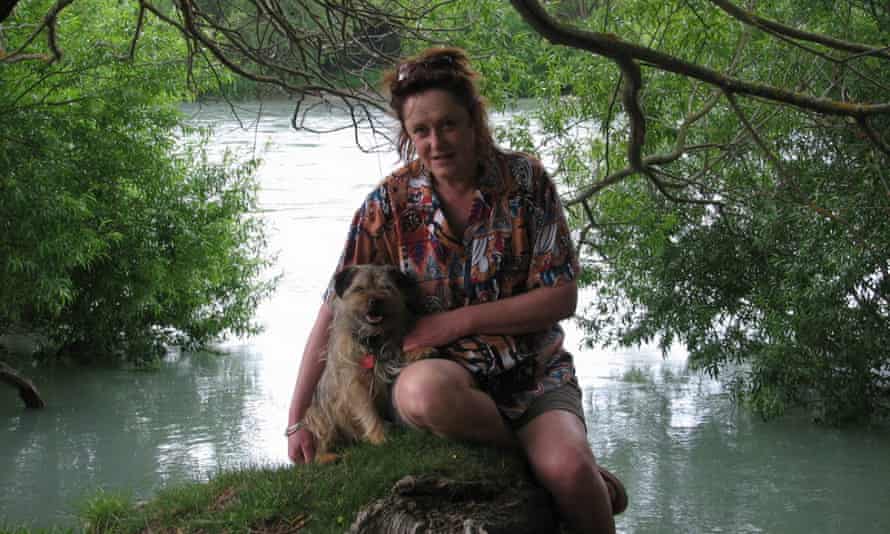
When, in June, Kathy Piercy was contacted by a woman claiming to exist her offset cousin, she was initially sceptical. "I idea: 'Yep, right – I know all my cousins.' Simply in that location'due south no doubting Dna." She had joined AncestryDNA four months earlier to find out more than about her ancestors' journey from Republic of ireland to New Zealand, where she lives "on a dusty road out the back of nowhere" in the rural Canterbury region. "In New Zealand and Australia, we've got different $.25 and pieces in united states, then information technology'due south more than relevant. I wasn't looking for anything in item, because I didn't know in that location was annihilation to observe."
But Judy Poole did. Raised past adoptive parents, equally an adult she forged a tenuous human relationship with her biological mother, who refused to talk over her father's identity. She had sent her sample to AncestryDNA in Apr hoping that it might throw up clues, but was not at all expectant. Kathy was listed as her first cousin. Afterwards some back and forth and "a bit of maths", says Kathy, they pieced together that her father was Kathy's uncle, who at nineteen had had a fling earlier his wedlock. He died in 2012. "Whether he knew of Judy'southward beingness, we volition never know," says Kathy. But she was able to put Judy in touch with his son, her half-brother – "and he was over the moon to have a big sister", she says.
Judy was taken aback past their instant connection – not to mention the physical resemblance. "I really do expect like Kathy. I've got my begetter's eyes." She did not have an especially happy babyhood, she says, then to have gained a new family has been "actually special". "If annihilation, you lot start losing relationships in subsequently life – merely I think what I really got out of spending time together was that I felt valued." She adds: "That's probably something that hasn't been in my life before."
Laura Business firm, a genetic genealogist studying at the University of Strathclyde, had a more complicated come across with Deoxyribonucleic acid testing. In researching her ain family, House learned her grandmother was illegitimate, the consequence of an extramarital affair that her cracking-grandmother had kept secret all her life. For her mother and aunt, "to learn something and so significant about their female parent, so long afterward she died, was quite moving", she says. "There was a lot of pathos because my grandmother never knew the truth almost who she really was, and [the homo she thought was her father] was very important to anybody. His name was a part of our identity."
The finding has caused tension within Firm's family, and some members continue to doubt it. That is the risk with DNA tests, she says: not everyone is ready to learn that what they believe to be true, is non – particularly secondhand. "Yous don't have to have tested yourself to discover that your father is not your begetter." And as more DNA is added to the database, y'all could exist in store for more surprises.
Daily activity in an AncestryDNA community on Facebook highlights how easily they are uncovered. "Why does my sister show equally a close family member or kickoff cousin?" someone posted recently; "Half sisters," was the reply, "pitiful if u didn't know." Another user posted about finding her father in less than 24 hours of getting her results: "I'm the happiest girl in the world right now … He didn't fifty-fifty know I existed."
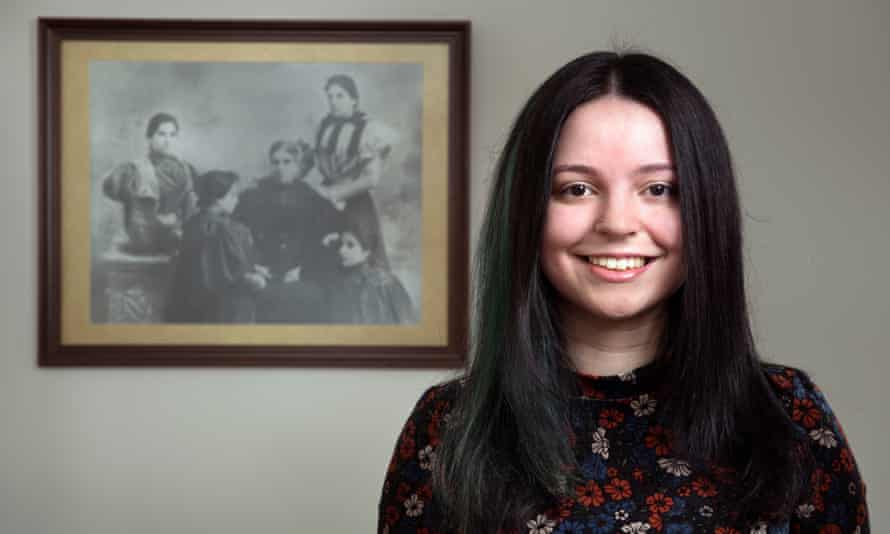
House says there needs to be more advice about how to approach those difficult conversations – it could even be included with the test kit. "People are beingness flung into these situations that are ethically extremely complicated and possibly stressful, and they need to be able to manage it.
"Annihilation they detect out volition have implications for their family. The ad that says 'I spat in a tube and discovered I was a Viking' does non give whatever sense that that is the situation you may find yourself in."
With tests that offer wellness screening, even surprises you have signed up for can have life-altering consequences. For example, 23andMe screens for genetic risk of diseases including Parkinson's and belatedly-onset Alzheimer'south, every bit well every bit whether you lot are a carrier for cystic fibrosis, amongst other conditions.
Next calendar month, Sara Altschule, a 31-year-former writer based in Los Angeles, volition undergo a preventative double mastectomy subsequently 23andMe revealed that she had a roughly 70% chance of developing breast cancer. She had been given the test by her sister, although every bit a self-described "light hypochondriac", she had paid for the wellness screening upgrade herself. Her greatest fright was that the results would show a risk of developing Alzheimer's. "I was then excited that I simply had i variant, I remember for coeliac disease."
Seven months later, in March this year, Altschule received an email from 23andMe, saying it had just been approved to test for three BRCA factor mutations linked to an increased hereditary take chances of breast cancer. She opted in: "I believe that cognition is power." The results returned positive for the same BRCA 2 variant carried by her begetter'southward cousin, who had gone on to develop cancer. The next working day she took a printout to a genetic counsellor.
To become that e-mail, she says, "is actually scary and overwhelming – information technology's dissimilar from a person walking yous through it". Simply it was also accessible. Being Ashkenazi Jewish, her risk of having such a mutation was about ane in twoscore, which she did not know before she was diagnosed. "At first it doesn't experience as if it's good news, but I look at it this fashion: now I can take charge of my health."
She credits 23andMe's testing with saving her life, although, she adds, information technology is hardly exhaustive, even for the atmospheric condition it does assess. "In reality, I probably have so many chances of developing so many things that the test doesn't test for." (A spokesperson for 23andMe stressed that it was not a diagnostic exam, and that the many steps involved meant "the customer should be fully informed of what all the possible outcomes of the report might be, before they have fifty-fifty sent off their kit for testing".)
Asked if she would have agreed to be tested for a condition that she was powerless to prevent or reduce her chances of developing, Altschule isn't certain. "If in that location'south nothing you can exercise about it, I don't think it would be helpful." But she seems to reconsider mid-reply. "It would definitely be hard – merely if you have that data, I think whatever person just wants to know. Merely yous accept to exist ready for the answer."
In Baronial 2016, non three months after she had sent off her saliva sample, Michèle flew to New York to visit 80 family members she had never met. Michèle's grandmother was delighted to meet her, her only granddaughter – and even more so to learn that she was pregnant. Her uncle took her to encounter her male parent's grave.
She remembers her four-day visit every bit overwhelming, exhausting and surreal. "It took me at least a couple of weeks to recover," she says. "Just they welcomed me with open arms."
Despite all that she has gained as a result – self-noesis, a family – Michèle remains ambivalent well-nigh her "traumatic" discovery. "There take been times when I'grand just kind of breaking down, and then angry and deplorable, that I say I wish I had never opened Pandora's box," she says, tearfully. Therapy, writing and, in item, the nativity of her girl have helped her to move on.
A few weeks ago, she felt able to return to AncestryDNA, for the first time in two-and-a-half years. On logging in, she was told her ethnicity results had been updated. She was gripped by a sudden fear: what if it really had been all a mistake?
But, she says with a snort: "I was even more than Italian than I'd thought I was."
Source: https://www.theguardian.com/lifeandstyle/2018/sep/18/your-fathers-not-your-father-when-dna-tests-reveal-more-than-you-bargained-for
0 Response to "Is My Child Mine? Dna Testing Kit Reviews"
Post a Comment